

Showing posts with label ejs-oil-spill-Jan-2017. Show all posts
Showing posts with label ejs-oil-spill-Jan-2017. Show all posts
31 March 2019
Student ideas for developing Changi
I stopped by the public exhibition of ideas by students as part of the 2019 Draft Master Plan. Lots of interesting ideas, including some focused on retaining and enhancing terrestrial biodiversity. But there doesn't seem to be much consideration for impact on the marine biodiversity there.
 I also took a quick look at ongoing and completed shore protection works, taking the route I did to check on the impact of the massive 300-tonne oil spill in the East Johor Strait in Jan 2017. The shores seem to be alright.

21 August 2017
Pipes still on Changi after excavation work
Not only was this Changi shore impacted by the 300-tonne oil spill in the East Johor Strait, but a huge excavator was also seen digging it up a few months afterwards.
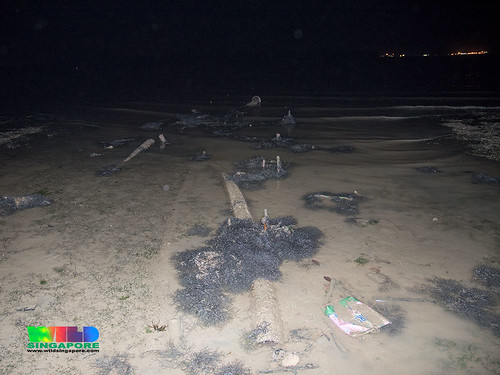 If the excavator works was to remove pipes on the shores (that have been there for years), was it done properly? Because today, there were still pipes, albeit in pieces, on the shore. What is going on?
13 July 2017
Changi seven months after the oil spill
These Changi shores were impacted seven months ago by the 300-tonne oil spill in the East Johor Strait, My last survey of this series of shores was in Jun 2016, six months after the oil spill.
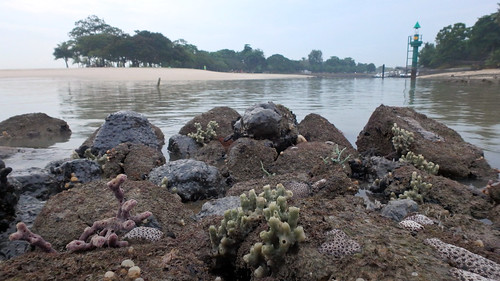 I saw many sponges of a wider variety on the rocky shores there, as well as sea fans and other colourful marine life. The seagrasses appear fine and I saw some of the usual animals. I also checked out Changi Creek, the mangroves up the Creek. I did not see any signs of massive oil spill impact.
14 June 2017
Changi six months after the oil spill
These Changi shores were impacted six months ago by the 300-tonne oil spill in the East Johor Strait, My last survey of this series of shores was in May 2017, five months after the oil spill.
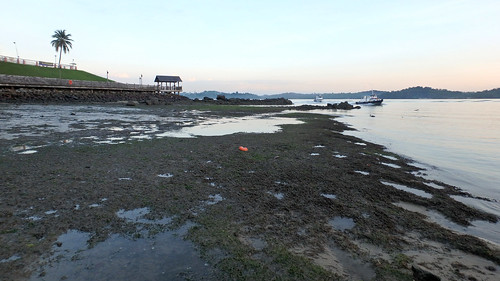 The seagrasses appear fine, I saw some of the usual animals, although the shore is less lively than usual. I also checked out Changi Creek, the mangroves up the Creek and shores at Carpark 3. I did not see any signs of massive oil spill impact.
31 May 2017
Punggol after the oil spill
This rocky shore is directly opposite the source of the 300-tonne oil spill in the East Johor Strait in January at Pasir Gudang Port in Johor.
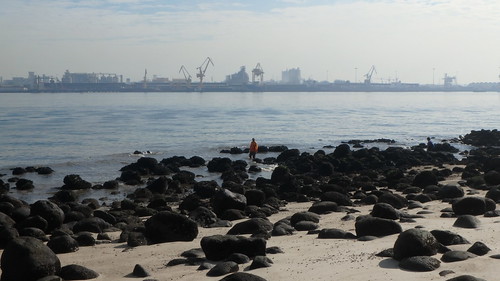 Five months later, I'm glad to find life on the shore. Although the diversity is much lower than in the past and I think the invasive mussels I saw in Kranji (the West Johor Strait) is also here.
30 May 2017
Signs of dugong at Changi
After a rain storm, we survey the large expanse of Changi's seagrass meadows during a super low tide. The seagrasses are lush and thick. We saw lots of dugong feeding trails!
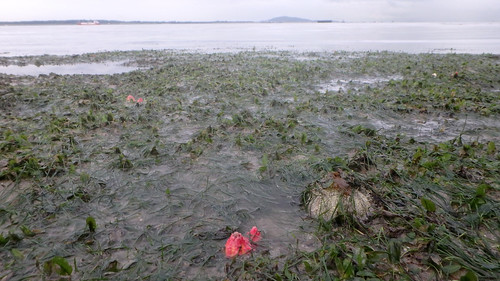 I heard that this shore was affected by the 300-tonne oil spill in the East Johor Strait in January. I didn't see any signs of oil today and was glad to see many of the usual animals.
27 May 2017
Cerianthid search at Changi
Today, we surveyed a shore that was badl affected by the 300-tonne oil spill in the East Johor Strait in January. Five months later, we are back with Dr Sérgio N. Stampar, an expert in cerianthids (peacock anemones).
It was a relief to find the seagrasses were doing well, with lots of cerianthids as well as other marine life.
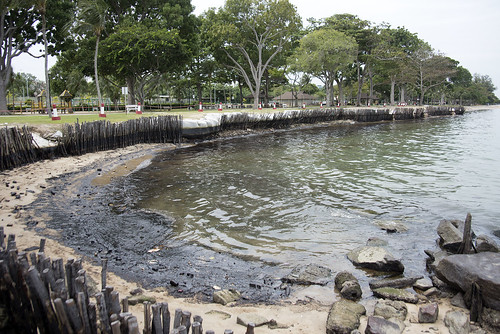 |
| I saw thick oil landing on this shore in 5 Jan 2017. |
26 May 2017
Reefy Changi still alive
There is a sea fan garden at Changi that is only exposed at the very lowest tides. Which tend to happen at ungodly hours. The reefiest parts of the shore were furthest away from human reach. Read more about how coastal boardwalks can do more harm than good.
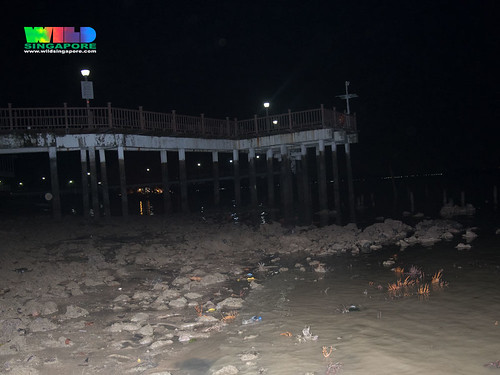 This shore was probably affected by the by the 300-tonne oil spill in the East Johor Strait in January. This is my first time at this shore since the oil spill.
15 May 2017
Changi five months after the oil spill
For the first time, I survey these Changi shores at low spring tide. They were impacted five months ago by the 300-tonne oil spill in the East Johor Strait, My last survey of this series of shores was in Mar 2017 two months after the oil spill at a low neap tide which doesn't expose much of the shore..
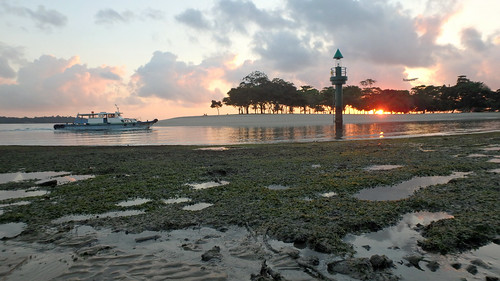 At low spring tide, I could see more of the shore. The seagrasses are no longer bleaching! And I saw some of the usual animals, although the shore is less lively than usual. I also checked out Changi Creek, the mangroves up the Creek and shores at Carpark 3. I did not see any signs of massive oil spill impact.
12 May 2017
Pasir Ris five months after the oil spill
Anemone hunt at soft silty shores of Pasir Ris Park! And a quick check on the seagrasses at the mouth of Sungei Tampines.
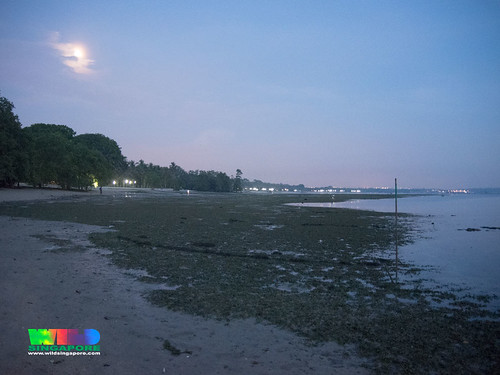 This shore was impacted by the the 300-tonne oil spill in the East Johor Strait five months ago. My last trip here was one week after the oil spill in Jan 2017.
27 April 2017
Changi seagrasses four months after the oil spill
A quick look at a Changi shore for impacts of the 300-tonne oil spill in the East Johor Strait that landed here four months ago.
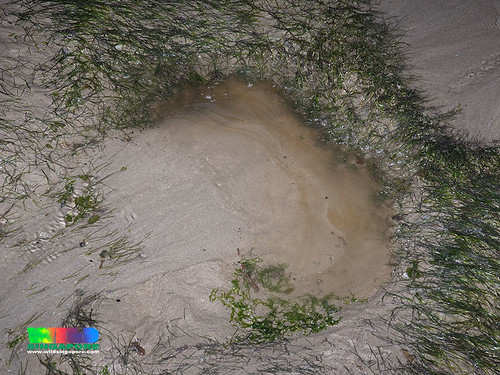
I heard that oil landed on this part of Changi during the East Johor oil spill four months ago. This morning, I saw a small patch of oil sheen on the high shore. But I did not see actual brown puddles of oil. And I did not see any bleaching seagrasses.
31 March 2017
Changi seagrasses with oil sheen and otters
The first morning tide for 2017! We survey a different Changi shore to check for impacts of the 300-tonne oil spill in the East Johor Strait that landed here three months ago.
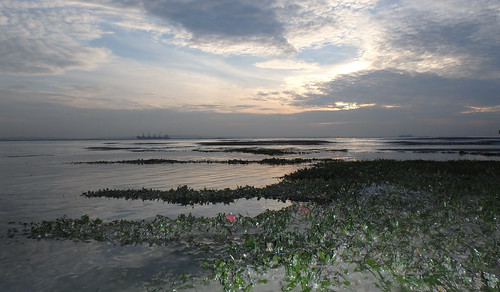 Nick saw 5 otters! But I missed them even though he called out to alert us. There was oil sheen on the shore, but seagrasses were not bleaching.
13 March 2017
Changi two months after the oil spill, with baby otters!
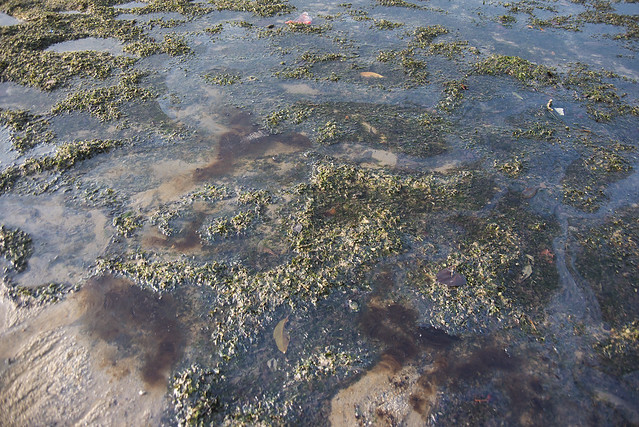
Two months after the 300-tonne oil spill in the East Johor Strait, there is still oil and sheen on seagrass meadows in the bay at Changi Creek. The seagrasses here are still bleaching.
 It was a treat to see the otter family with their recently born pups at the beach! These babies will have to learn to survive on our shores that are impacted by oil spills, marine litter and many other human caused dangers.
10 February 2017
Changi Creek one month after oil spill, with otter!
One month after the 300-tonne oil spill in the East Johor Strait, signs of the oil spill remains at Changi Creek near the Changi Point Ferry Terminal.
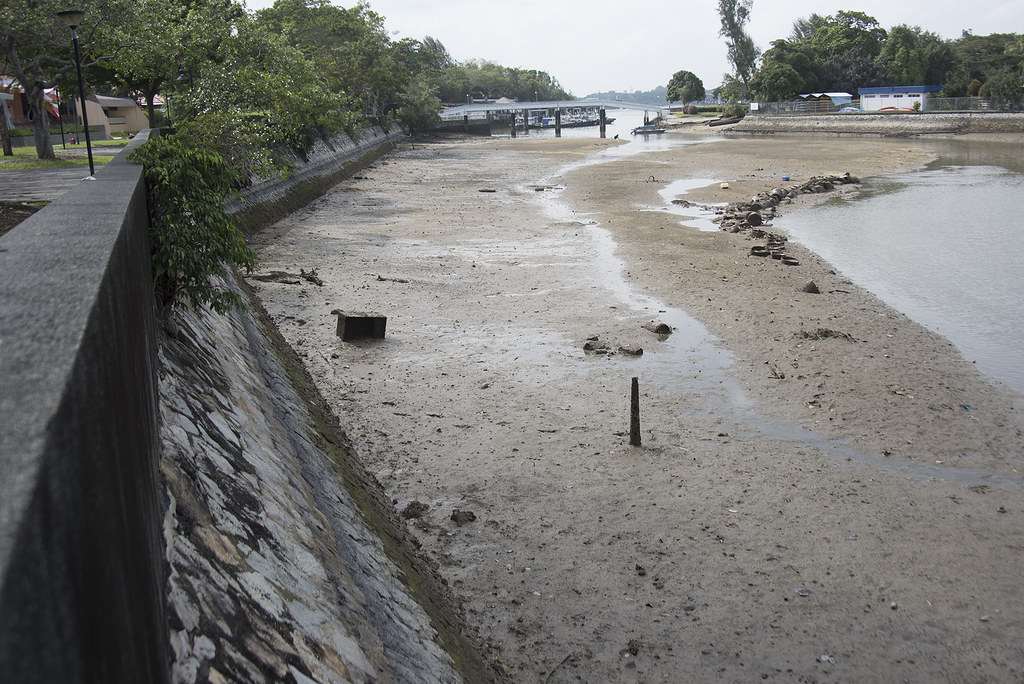 There is some improvement compared to our last oil spill impact survey in Jan 2017, about two weeks after the oil spill. Although the band of oil stain is still clearly visible, I couldn't smell the oil from above the seawall. And we saw an otter!
Changi Creek mangroves one month after the oil spill
One month after the 300-tonne oil spill in the East Johor Strait, there are few signs of the oil spill at the mangroves of Changi Creek.
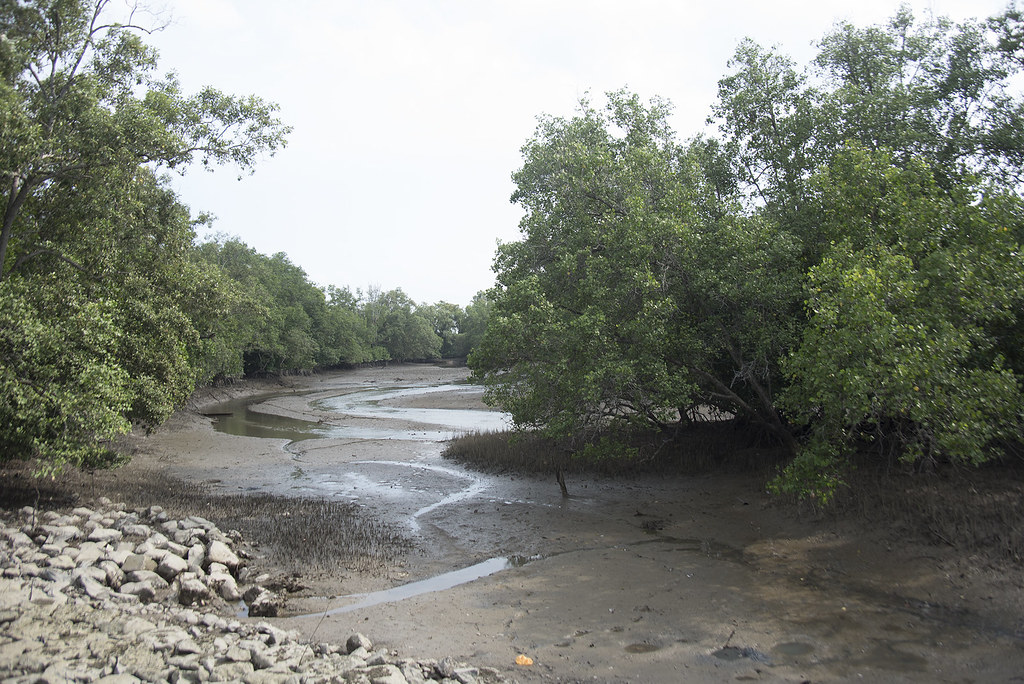
There is some improvement compared to our last oil spill impact survey in Jan 2017, about two weeks after the oil spill. I could no longer clearly see the narrow band of oil stains on the mangrove trees. But it was alarming to see one large mangrove tree had snapped at the trunk.
Changi Beach one month after the oil spill
One month after the 300-tonne oil spill in the East Johor Strait, signs of the oil spill remains at Changi Beach near Carpark 3.
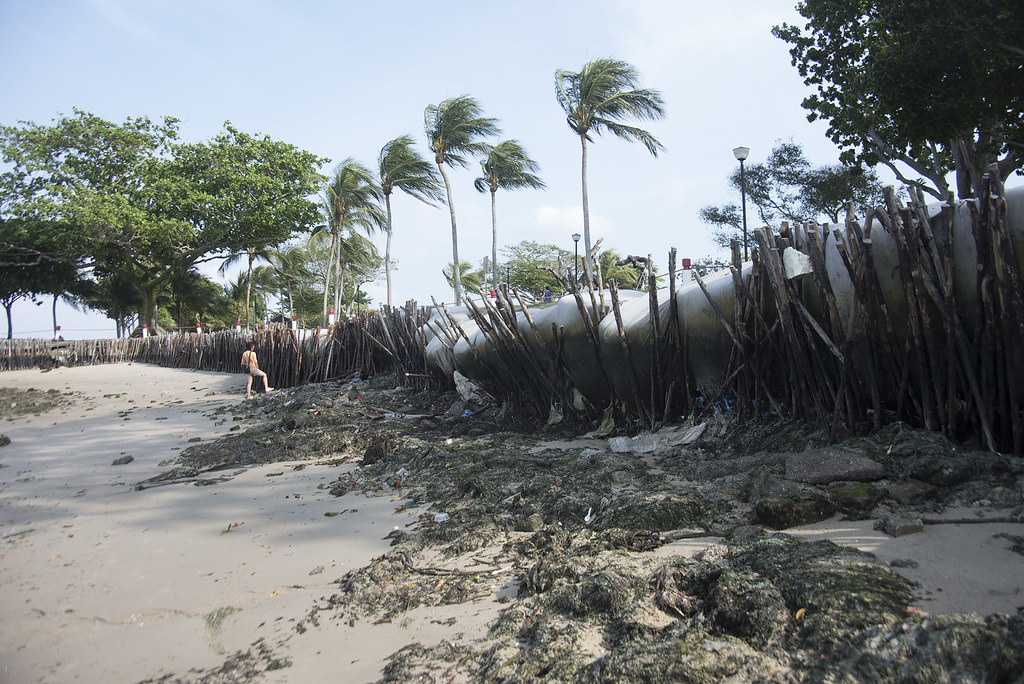 Things seem unchanged if not worse, compared to our last oil spill impact survey in Jan 2017, about two weeks after the oil spill. Attempts to deal with oiled stakes appear to have resulted in more debris on the shore.
Bleaching at Changi seagrass meadows one month after the oil spill
One month after the 300-tonne oil spill in the East Johor Strait, widespread bleaching is seen in small seagrass meadows near Changi Point Ferry Terminal.
On the high shore, oil has accumulated in a large depression in the sand. The situation appears a little worse, compared to our last oil spill impact survey in Jan 2017, about two weeks after the oil spill.
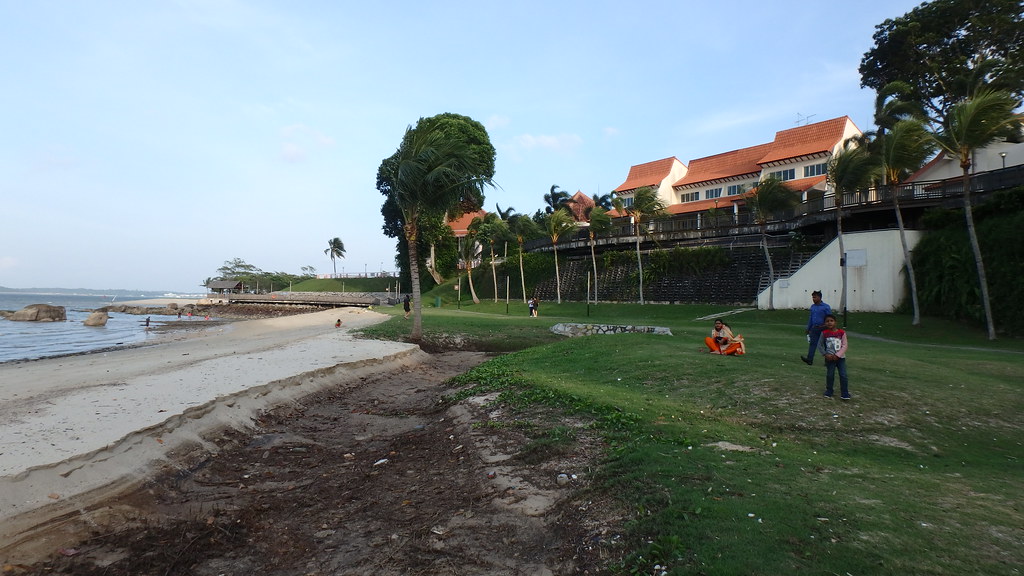 |
| A family rests on the grass near the oil accumulation. |
03 February 2017
Round Ubin survey for oil spill impact and long-term monitoring
The Ubin Community came together to plan long-term monitoring of Ubin mangroves following the 300-tonne oil spill in the East Johor Strait one month ago.
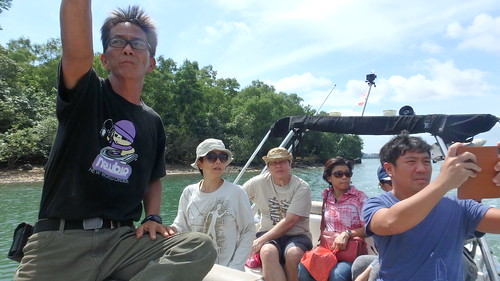 Thanks to Phillip Lim, we made a quick survey by boat of the entire Pulau Ubin coastline. I was glad to see teams cleaning up oil spill impact on the northern shore, but heartbroken to see the impact on some of the northern mangroves.
21 January 2017
Changi Creek and Sungei Ubin after the oil spill
Nearly three weeks after the 300-tonne oil spill in the East Johor Strait, I had a quick look at oiled areas at Changi Creek. It looks similar to what I saw a week ago.
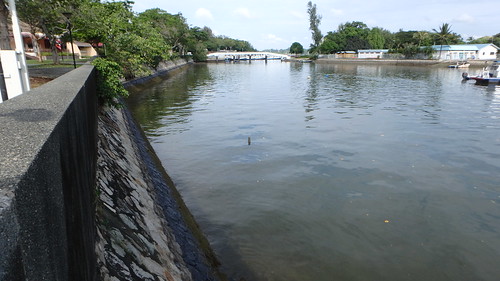 For the first time, I also checked the Sungei Ubin area at Pulau Ubin during a walk with Restore Ubin Mangroves (R.U.M.) Initiative. It was a relief not to see any signs of oil here.
16 January 2017
Oil spill at East Johor Strait: YOUR sightings part 2
This weekend, lots of volunteers checked up on our northern shores to see how the oil spill impacted them. Among the most important, volunteers gently kayaked into the heart of Ubin mangroves to check up on the impact there.
Minister Desmond Lee also shared some of what happened during the oil spill.
 |
| Thanks to Ng Siak Juay, Victor Toh and Chan May Yen with Phillip Lim's support for doing this kayak survey. |
Subscribe to:
Posts (Atom)