 |
| Dugong feeding trails at Chek Jawa, Mar 2024 |

Showing posts with label issues-local. Show all posts
Showing posts with label issues-local. Show all posts
19 January 2026
To protect dolphins and dugong: reduce boat speed and restrict entry at hot spots
NUS scientists urge increased protection for marine mammals in Singapore's waters, identifying hotspots near the Sungei Johor Estuary, the Southern Islands and the Western Islands.
Research suggests reduced vessel speeds and restricted entry in hotspots can mitigate boat strikes, mirroring protection in Queensland.

02 November 2025
Two unrelated pollution events at East Johor Straits (1 Nov 2025)
Two unrelated pollution events occurred on 31 Oct; one in the Johor River caused by sand mining activities, the other a palm oil spill that affected the coastal waters off Kampung Pasir Putih in Johor.
Singapore agencies were closely monitoring and as at 1 Nov, NParks has not observed any impact at biodiversity-rich sites at Pulau Ubin, Coney Island Park, Pasir Ris Park and Changi Beach Park. Water quality in Singapore is normal and fish farms are unaffected.
PUB’s Johor River Waterworks have been temporarily suspended, water supply in Singapore remains unaffected as it has stepped up production at local plants to meet demand. Operations will resume when water quality checks show that the Johor River quality is back to normal.
Update: Operations at PUB's Johor River Waterworks resumed on 2 Nov.
Media articles below
.jpg) |
| Photos of palm oil spill (above) and sand mining operations (below) from Bernama |
Singapore agencies were closely monitoring and as at 1 Nov, NParks has not observed any impact at biodiversity-rich sites at Pulau Ubin, Coney Island Park, Pasir Ris Park and Changi Beach Park. Water quality in Singapore is normal and fish farms are unaffected.
PUB’s Johor River Waterworks have been temporarily suspended, water supply in Singapore remains unaffected as it has stepped up production at local plants to meet demand. Operations will resume when water quality checks show that the Johor River quality is back to normal.
Update: Operations at PUB's Johor River Waterworks resumed on 2 Nov.
Media articles below
08 October 2020
How much sh*t is in our waters?
Finally, NEA is providing public weekly water quality assessments. Previously only provided once a year.
This water quality information is based on the levels of enterococcus bacteria in the water.
Enterococcus bacteria comes from feces of humans and warm-blooded animals. Possible sources include human sewerage released untreated into the water, and untreated waste from live-stock farms.
Levels of enterococcus bacteria indicate the possible presence of disease-causing bacteria/viruses. These can sicken people who swim, dive or do water sports; with possible diseases of the skin, eyes, ears and respiratory tract. Eating fish or shellfish harvested from waters with fecal contamination can also result in human illness.
What are possible sources of enterococcus bacteria in the northern shores?
 |
| from NEA's Beach Short-term Water Quality Information |
This water quality information is based on the levels of enterococcus bacteria in the water.
Enterococcus bacteria comes from feces of humans and warm-blooded animals. Possible sources include human sewerage released untreated into the water, and untreated waste from live-stock farms.
Levels of enterococcus bacteria indicate the possible presence of disease-causing bacteria/viruses. These can sicken people who swim, dive or do water sports; with possible diseases of the skin, eyes, ears and respiratory tract. Eating fish or shellfish harvested from waters with fecal contamination can also result in human illness.
What are possible sources of enterococcus bacteria in the northern shores?
07 September 2020
Hooked to death: Irresponsible fishing kills
A 4-month-old otter pup was found dead on 6 Sep
with a fishing hook lodged in her throat.
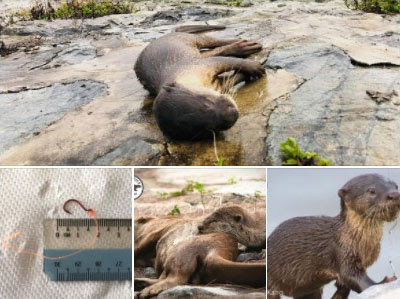 Last month, a community cat that lives on St John's Island had a narrow escape
after it accidentally swallowed a fish hook. He was found and brought to the vet
in time. The baby otter was not so lucky.
Last month, a community cat that lives on St John's Island had a narrow escape
after it accidentally swallowed a fish hook. He was found and brought to the vet
in time. The baby otter was not so lucky.

15 March 2020
White sediments on Chek Jawa - where is it coming from?
Today, at Chek Jawa off the boardwalk, there was a long stretch of white sediments on the high shore.
 Opposite this stretch of white sediments, there was work on part of the boadwalk. Is this where the sediments came from?
27 February 2020
EIA for Sisters' Islands Marine Park for public viewing 24 Feb-23 Mar 2020
NParks plans to build, among others, a boardwalk and floating pontoon on the Sisters Islands Marine Park. Their Environmental Impact Assessment (EIA) for these plans is now available for public viewing from 24 Feb to 23 Mar 2020.
More details below.
 |
| Artist impression of proposed floating pontoon. |
03 April 2019
Balloons - NOT worth celebrating!
Thanks to Rachel Mark and Cassandra Chai for highlighting the deadly impact of balloons on our marine life!
 They share more about the harmful effects of balloons, some misconceptions and alternatives to balloons for your party and celebrations!
01 April 2019
13 Apr (Sat): Visit the 2019 Draft Master Plan exhibition with Lepak in SG
Join youth volunteers from Lepak in SG on this visit to learn more and share your important feedback and suggestions!

The event is FREE but registration is required here https://tinyurl.com/lepak13apr

The event is FREE but registration is required here https://tinyurl.com/lepak13apr
31 March 2019
Student ideas for developing Changi
I stopped by the public exhibition of ideas by students as part of the 2019 Draft Master Plan. Lots of interesting ideas, including some focused on retaining and enhancing terrestrial biodiversity. But there doesn't seem to be much consideration for impact on the marine biodiversity there.
 I also took a quick look at ongoing and completed shore protection works, taking the route I did to check on the impact of the massive 300-tonne oil spill in the East Johor Strait in Jan 2017. The shores seem to be alright.

30 March 2019
All islands cleared of asbestos and open to the public
"All asbestos waste on the islands managed by SLA has been cleared safely" says the Singapore Land Authority in media articles. They are now open to the public again.
SLA said that the asbestos "most likely" came from roof sheets, and was discovered in April 2018 by their contractors during maintenance and upgrading works on St John's Island. Since then, the following islands have been checked for and cleared of asbestos: Pulau Hantu, Kusu Island, Seringat-Kias, the Sisters Islands and Pulau Ubin.
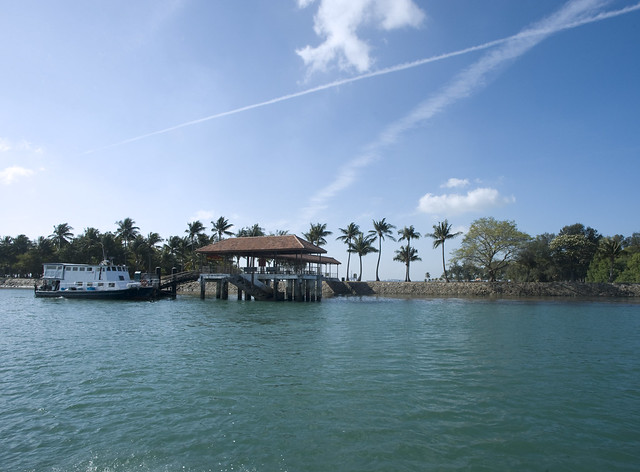 |
| Pulau Hantu Kecil |
28 March 2019
Climate change in the 2019 Draft Master Plan
Under "Adapting to Climate Change", the Plan projects that "by the year 2100, Singapore’s temperature will rise by 1.4°C to 4.6°C and sea levels could rise by up to 1m. The intensity and frequency of heavy rainfall events are also likely to increase while conversely, dry seasons could become even drier."
 Glad to see the role of greenery in reducing urban heat is supported. Hopefully, ecosystems can be more fully considered in mitigating flood risks and rising seas.

Pulau Ubin and northern shores in the 2019 Draft Master Plan
It appears the plan is for the northern coastline to remain rustic: from Sungei Buloh to Changi. It includes reassuring references to continued presence of wild mangroves at Pasir Ris and Khatib Bongsu; and Chek Jawa is mentioned as "one of Singapore's richest ecosystems".
At Pulau Ubin, there is now no areas designated for agriculture use. But the reclamation profile on Pulau Ubin remains unchanged. And I remain worried about the Round Island Route which skirts close to the shoreline, particularly the area at the eastern tip of Pasir Ris Park and along the Changi coast.
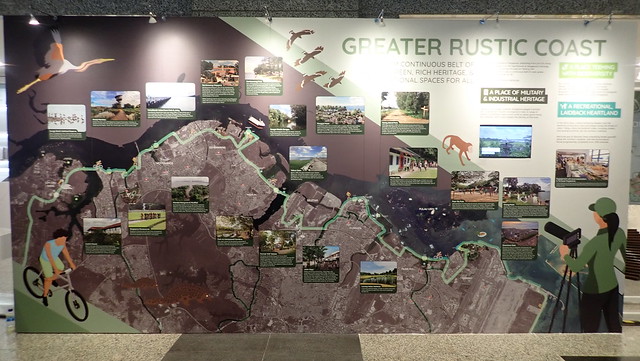 |
| Illustrative panel of the Greater Rustic Coast at the Draft Master Plan exhibition. |
Southern shores in the 2019 Draft Master Plan
Good to see that plans take into consideration the rich shores at Labrador Park and Berlayar Creek. There doesn't seem to be any planned reclamation in the South. Meanwhile, the maps have been updated with Singapore's first marine park.
 |
| from Urban Transformations>Greater Southern Waterfront |
Eastern shores in the 2019 Draft Master Plan
Plans for 'Changi City' may impact corals reefs and seagrass meadows that have settled on the artificial shores at Tanah Merah and East Coast Park. This shore is probably already impacted by massive new reclamation, currently ongoing.
 But such plans may also be an opportunity to incorporate and nurture the amazing marine life that is already found there.

02 March 2019
Balloons the no. 1 marine debris killer of seabirds
Another reason to stop balloon releases: A study has found that balloons are the highest-risk plastic debris item for seabirds -- 32 times more likely to kill than hard plastics. Researchers found one in three of dead seabirds had eaten marine debris.
"Although soft plastics accounted for just 5 per cent of the items eaten they were responsible for more than 40 per cent of the deaths. Balloons or balloon fragments were the marine debris most likely to cause death, and they killed almost one in five of the seabirds that eaten them."
Does Singapore have seabirds? Yes! Here's more about them.
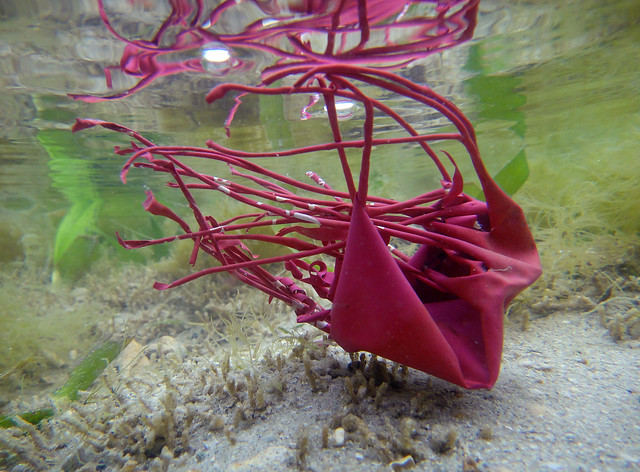 |
| I saw this exploded balloon floating in the water at Cyrene. |
Does Singapore have seabirds? Yes! Here's more about them.
18 November 2018
Let's help NParks stop grasscutters from littering plastic strings
Thanks to NParks sharing background on the issue and the immediate and long-term steps they are taking to stop grasscutters from littering plastic nylon strings. This follows my letter to NParks and MSO on 7 Nov.
NParks has instructed their contractors to stop littering. In the longer term, NParks hopes where possible, to convert grass areas into Nature Ways. NParks appreciates the sightings and mapping and hopes the public can continue to help pick up legacy string and share sightings, in order to keep track of the situation and permanently resolve this issue.
 |
| Some of the many sightings of plastic strings found by the public since Aug 2018. |
 |
| Sightings are updates on this public google map. |
07 November 2018
How can we stop grasscutters from littering nylon strings?
The issue of grasscutter nylon string litter is in the Straits Times, thanks to Jose Hong. A letter on this has been sent to NParks and the Municipal Services Office. In it, I highlight that we don't want to just complain, but want to help to stop this permanently.
Special thanks to all the people who tirelessly picked up, photographed and shared their sightings of these heartbreaking litter all over Singapore. Please keep sending me your sightings.
More details below.
 |
| 41 strings collected in a short time at Gardens by the Bay 18 Sep 2018 by Ria Tan. |
More details below.
27 April 2018
Changi Boardwalk: a death trap for wildlife?
Yesterday, two otters were found dead near the Changi boardwalk near Changi Sailing Club. According to media reports, one of the otters was found along the beach (left), while the other was found in a metal trap used to catch crabs and fish (right).
 I have seen such huge fish traps along Changi Boardwalk on almost every survey throughout the years. There are other impacts from line fishing and net fishing too.
Changi Boardwalk is a magnet for fishermen. On a typical weekend when the tide is right, segments of the boardwalk over the water is completely taken over by fishermen who lay fishing rods, traps and lines in dense numbers. I shared more about how poorly managed boardwalks can do more harm than good in this old blog post. This is what I saw on 10 Jul 2016. This is not very different from what I saw in 2009 in the same place.
These lines snag and kill all kinds of marine life and not just the targeted fish and crabs. These fishermen do not take everything they catch, often leaving unwanted animals on the boardwalk to die. I have seen seahorses killed this way.

Changi Boardwalk is a magnet for fishermen. On a typical weekend when the tide is right, segments of the boardwalk over the water is completely taken over by fishermen who lay fishing rods, traps and lines in dense numbers. I shared more about how poorly managed boardwalks can do more harm than good in this old blog post. This is what I saw on 10 Jul 2016. This is not very different from what I saw in 2009 in the same place.
 |
| Yellow arrows point to lines in the water attached to traps. These lines are placed on both sides of the boardwalk. |
24 April 2018
Half of St John's Island closed after asbestos found
Half of St. John's Island was closed on 17 Apr 2018, a day after samples taken from the campsite, lagoon and holiday bungalow area tested positive for asbestos said the Singapore Land Authority (SLA).
I've seen construction debris dumped on St John's and Lazarus Island, squashed into crevices in the natural cliffs. "Going forward, how will the authorities ensure future proper disposal of general trash and industrial and construction waste?" is the quote I shared with the Straits Times.
Update 1 Jan 2019
Update 25 Feb 2019
 |
| More than half the island will be closed. From Channel NewsAsia. |
Update 1 Jan 2019
Update 25 Feb 2019
18 April 2018
Butane gas spill off Life Firing Islands, 17 Apr 2018
A collision between an LPG tanker and a tanker resulted in a spill of 1,796 metric tonnes of butane gas.
 The accident happened on 17 Apr 2018 at 2.30am about one nautical mile south of Tuas Extension in Singapore waters. Some of our most pristine shores lie nearby, such as the Live Firing Islands and large 'Terumbus' or submerged reefs.

Subscribe to:
Posts (Atom)